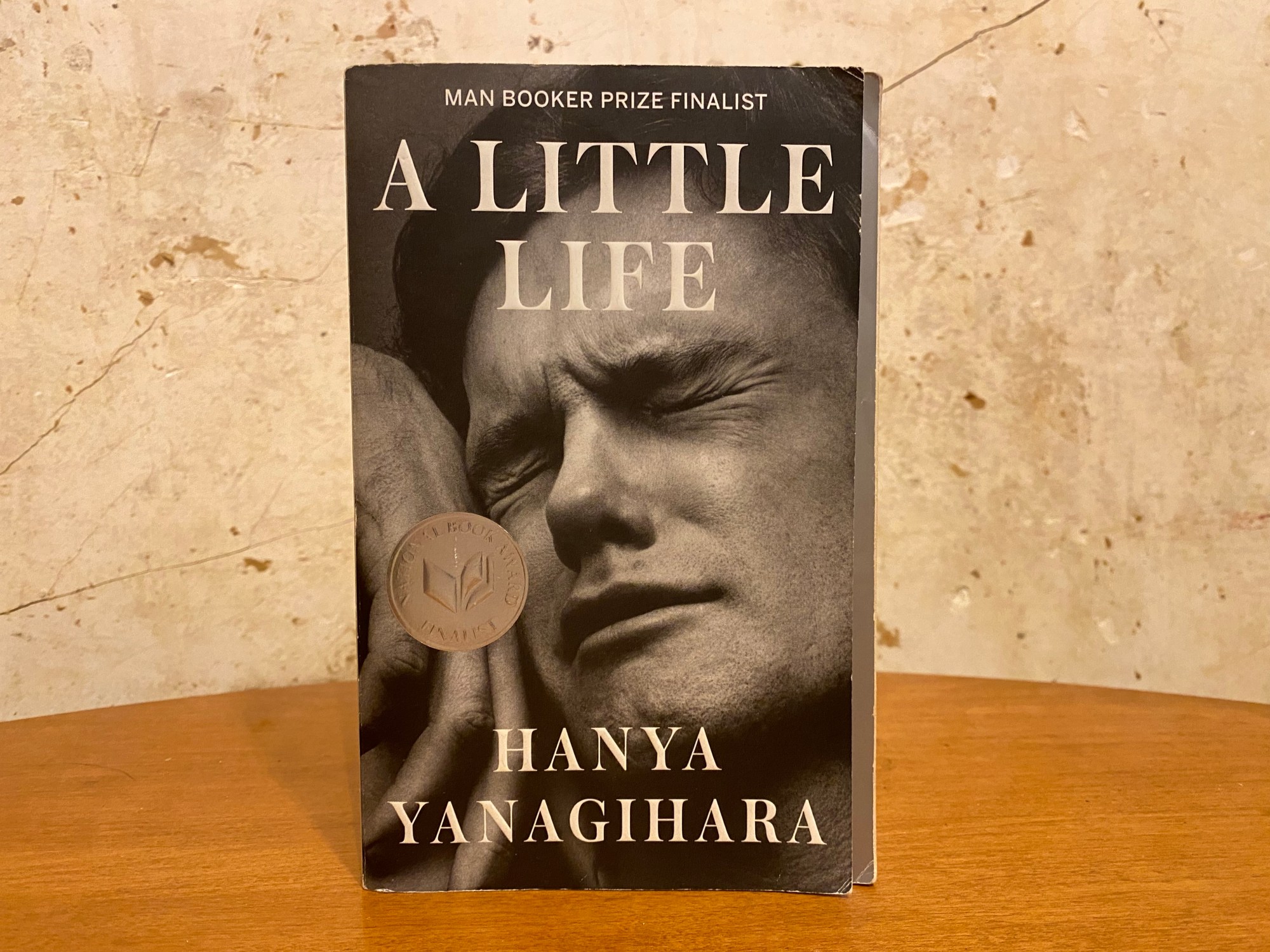
2023 began as a quiet reading year that slowly picked up in pace as I discovered new tastes and new books that suited those tastes. In particular, I found myself to be an enthusiast for Japanese fiction. These were all the books I read this year, followed by the best and the worst ones:
- The Tommyknockers, Stephen King
- Sybil Exposed: The Extraordinary Story Behind the Famous Multiple Personality Case, Debbie Nathan
- The Curious Incident of the Dog in the Nighttime, Mark Haddon
- The Dutch House, Ann Patchett
- Whereabouts, Jhumpa Lahiri
- First Person Singular: Stories, Haruki Murakami
- What My Bones Know: A Memoir of Healing from Complex Trauma, Stephanie Foo
- A Little Life, Hanya Yanagihara
- I Know This Much is True, Wally Lamb
- Darke (Septimus Heap), Angie Sage
- The Wind-Up Bird Chronicle, Haruki Murakami
- My Year of Rest and Relaxation, Ottesa Moshfegh
- The Sound of Waves, Yukio Mashima (click for full review)
- After the Quake, Haruki Murakami
My Best Reads of 2023:
A Little Life, Hanya Yanagihara
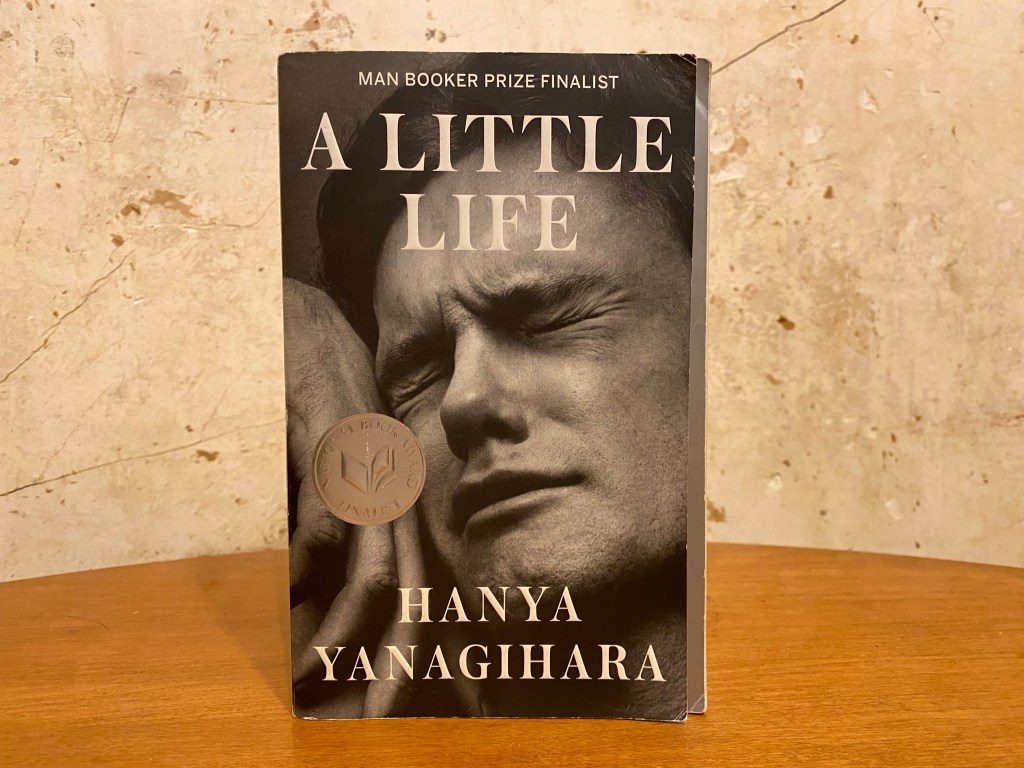
A Little Life follows Jude, and his three friends, Willem (who later becomes his partner), Malcolm and J.B. The story ultimately focuses on Jude, the center piece of the foursome, as it unravels the excruciating experiences that lead to the person he is. He lives, as the title states, a little life— he exists as if in a small box, every side of which is fettered and fenced in by unspeakable trauma. Yanagihara shows the importance and beauty of friendship in building the box ever so slightly bigger with each step forward in life. However, she also shows the reality that sometimes, that is not enough. Sometimes, the monsters live inside the box with you and cannot be tamed or expelled. They refuse to be satiated and as Jude slowly discovers, the only way to escape them is to destroy the box entirely.
I find that Yanagihara’s A Little Life is the most accurate and honest portrayal of childhood trauma and its effects I’ve come across so far. It is far more realistic than books (Like I Know This Much is True) which seek to force a happy ending, inevitably discounting the sometimes overwhelming and inescapable imprints of a lifetime of suffering.
After the Quake, Haruki Murakami
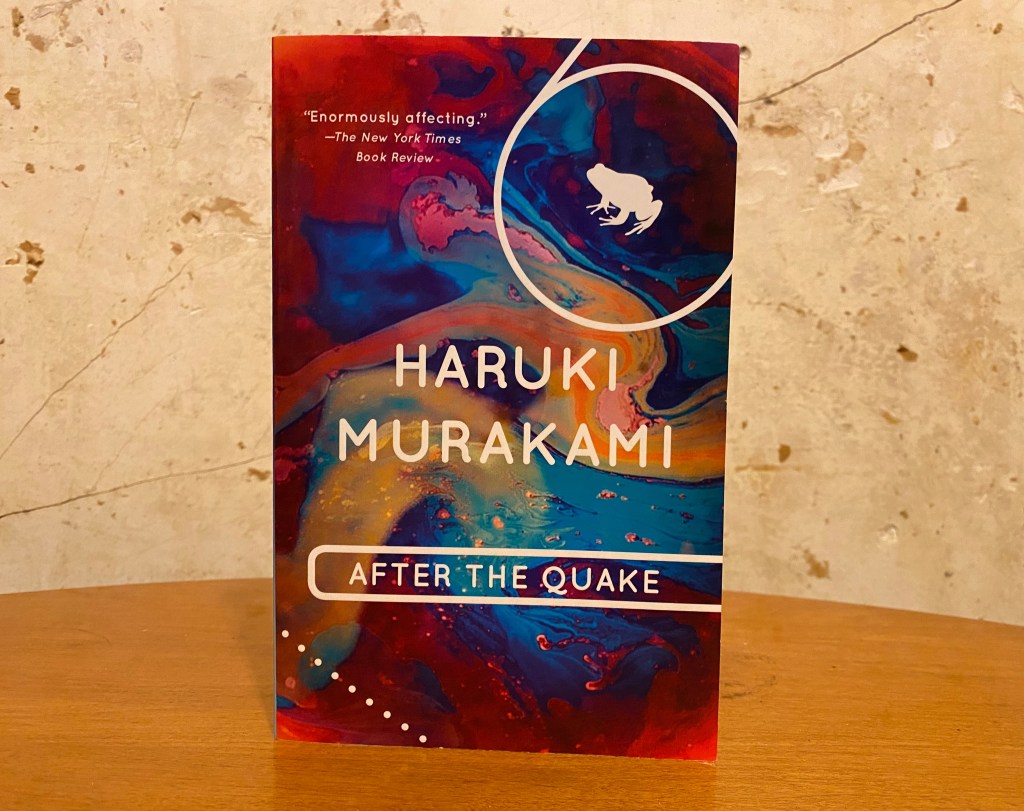
My favourite of Murakami’s short fiction so far, After the Quake features stories about people that are all in some way connected to the 1995 Kobe earthquake. None of the characters live in Kobe, but are in various ways related to people who do, albeit in estranged or indirect ways. The stories posit different symbolic ways of reading the earthquake— fractured relationships, new worldviews, and combat with evil and turmoil within and without the self. Ultimately, these battles— these ‘shakings’— reveal surprising resilience and hope even within the most invisible and ordinary of people.
My Year of Rest and Relaxation, Ottessa Moshfegh
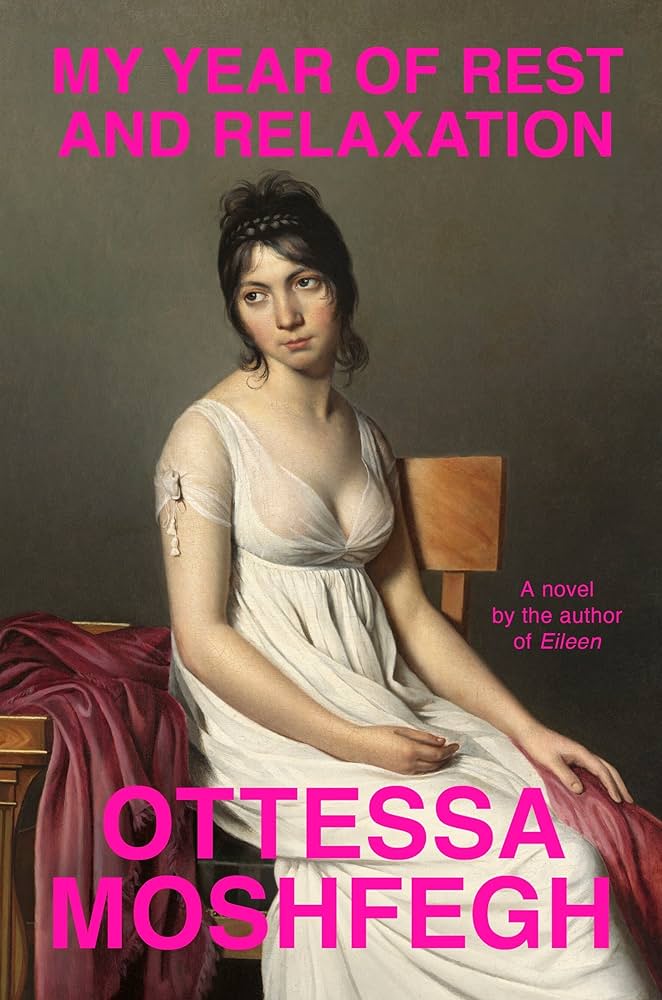
Ottessa Moshfegh’s My Year of Rest and Relaxation runs in a similar vein as American Psycho, juxtaposing the glitz and glamour of the high life in New York City with an emptiness that those who participate in it can sometimes feel. Moshfegh’s unnamed protagonist is ridiculously privileged, using her seemingly bottomless inheritance to literally sleep as much as she can. She posits that if she spends an entire year doing so, she will emerge a brand new person. The novel consistently creates the expectation that everything is about to come to a head— it is set in 2000, and as much as the protagonist seeks to live in a bubble, the political still seeps in. 9/11 is constantly foreshadowed throughout the novel. The worst of which is that both her on-and-off boyfriend and her best frenemy work at the Twin Towers. Ultimately— and this is my favourite part— the reader is denied any sort of catharsis. Everything: her sleep, even her friend’s death, amounts to nothing but superficial beauty in the end, no matter what ‘meaningful’ spin she tries to put on all of it. My Year of Rest and Relaxation’s promise to comment in any significant way on political turmoil, trauma and relationships is really like a deep lake with such a shiny, polished surface that nothing is ultimately revealed but one’s own vain reflection.
Whereabouts, Jhumpa Lahiri
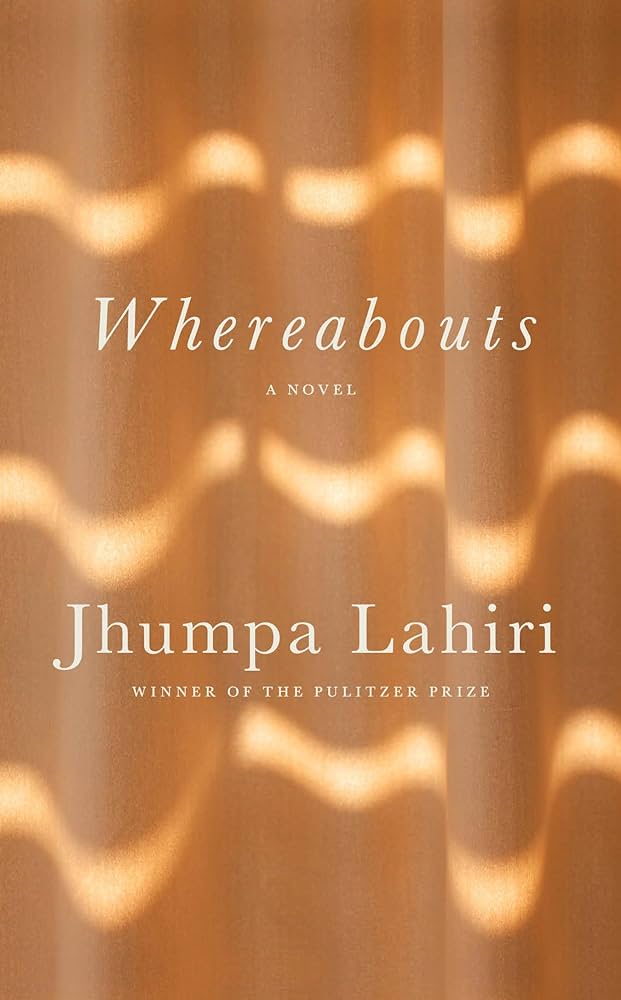
Whereabouts is written in short chapters, following an unnamed protagonist through her daily life and encounters in different parts of an unnamed city, probably somewhere in Italy. Lahiri writes in succinct prose that reveals how things and places that seem so commonplace can be imbued with so much meaning for a person when they consider them their home.
My Worst Reads this year:
The Tommyknockers, Stephen King

The Tommyknockers is only Stephen King I read this year and probably the only that I’ll be reading for a while. It tells the story of a town that slowly gets taken over by aliens. As compared to more popular depictions, however, these are invaders of the mind: the aliens hijack the townspeople’s thoughts and make them do their bidding. Slowly, the entire town turns into a single hive mind and devotes its whole purpose and life to transforming themselves and their town for their extraterrestrial masters. Simultaneously, their bodies undergo grotesque transformations, and these humans look more and more like their alien counterparts overtime. The only ones who stays relatively immune to this change is Gardner, the protagonist, as he has a brain plate from a skiing accident, and a couple others who have similar advantages. Overall, this book moves so slowly it feels like a dull boat ride through a horror museum that has just enough points of interest to keep me from disembarking till the end.
I Know This Much is True, Wally Lamb
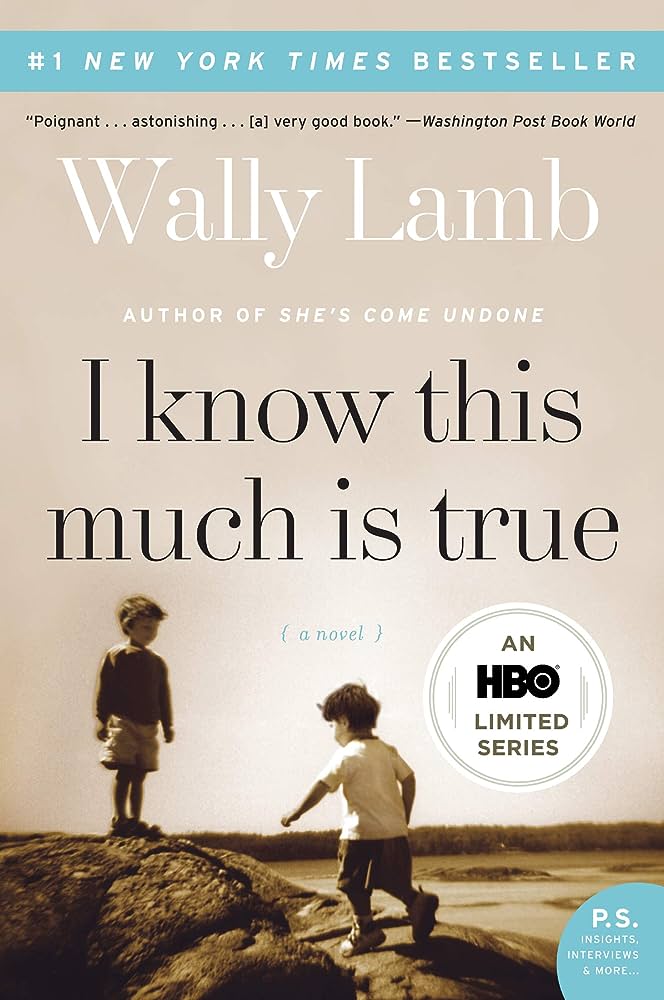
I Know This Much is True nearly made it into my best of 2023, but its glaring blind spots were just too large. It tells the story of twins Dominick and Thomas Birdsey as they navigate Thomas’ schizophrenia and growing up in the hostile, unbearable environment created by their abusive stepfather Ray and submissive compliant mother Concettina. I Know This Much is True appears to be a ‘complex’ portrayal of mental health sufferers, particularly of those with trauma and schizophrenia. However, it ends up doing nearly the complete opposite, progressively shutting down and up the two characters which suffer the most— Thomas Birdsey and the twins’ mother. Instead, Lamb presents the narrative from Dominick’s perspective. This is supplemented with extracts from their grandfather Domenico’s autobiography, in which he proves to be the most self-aggrandising, abusive person who completely lacks any self-awareness . As Dominick reads this autobiography, he grows to hate the pompous, self-pitying narcissist, not realising that he resembles the man in more than just his name.
For a book touted for its portrayal of victims of society and the terrible mental health that results from terrible experiences, I Know This Much is True ironically gives the victors, not the victims, a voice. Ultimately, Dominick gets a happily ever after, spouting a stream of beautiful-sounding platitudes about forgiveness and love, as if any of it benefits the ones who suffered so much that death was the only means of attaining any semblance of peace.


One thought on “The 14 Books I Read in 2023, The Best and Worst”