
I’m a little late to the game, but here are all the books I’ve read so far this year and my review of my favourite ones.
- Colorless Tsukuru Tazaki and His Years of Pilgrimage, Haruki Murakami
- Breasts and Eggs, Mieko Kawakami
- Burnt Sugar, Avni Doshi
- White Fragility: Why It’s So Hard to Talk to White People About Racism, Robin DiAngelo (audiobook)
- Crime and Punishment, Fyodor Dostoyevsky
- Blue Nights, Joan Didion (audiobook)
- Kampong Boy, Lat
- Town Boy, Lat
- A Tale for the Time Being, Ruth Ozeki
- The Boy and the Dog, Seishu Hase
- The Twilight World, Werner Herzog
- Ben, in the World, Doris Lesing
- Into Thin Air, Jon Krakauer
- Breakfast at Tiiffany’s, Truman Capote
- A Father’s Story, Lionel Dahmer
- The Last of Her Kind, Sigrid Nunez
- I’m Glad My Mom Died, Jeanette McCurdy (audiobook)
- Anne of Green Gables, L.M Montgomery (audiobook)
- The Beach, Alex Garland (audiobook)
- Kafka on the Shore, Haruki Murakami
Narrowing the list down to my top 5 was difficult as so many of the books were fantastic but if I had to pick, here they are:
5. The Beach, Alex Garland (audiobook narrated by Michael Page)

The audiobook of The Beach read by Michael Page might very well be the best audiobook I’ve ever listened to. The Beach is in short, a modern-day rewriting of The Lord of the Flies masquerading as travel book. As compared to The Lord of the Flies, The Beach is way more subtle. It begins with Richard, the main character, traveling in Thailand. One fateful night on Khao San Road, a man who calls himself “Mr. Duck” gives him a map to a secret beach before killing himself by slashing his wrists. Richard befriends two other travellers Etien and Francoise and they set out to find the beach together.
The inhabitants of the beach present their home and livelihood as utopia— they have found the ultimate traveller’s dream; a holiday without end. With time, however, the darker aspects of the beach get clearer, and more dangerous. Richard has to fight not to lose himself as he navigates this growing dystopia, guided always by Mr. Duck’s companionable ghost, blood dripping from his wrists.
4. Colorless Tsukuru Tazaki and His Years of Pilgrimage, Haruki Murakami

Colorless Tsukuru Tazaki and His Years of Pilgrimage was the first book I read this year, opening a cold and distant January. Eight months later, I still remember the gentle warmth this book provided.
I still think about two scenes sometimes:
First, when Tsukuru is sitting at a train station, contemplating his life and all the relationships that shape it. Meanwhile, trains come and go at the station, symbolising how each relationship has its own time and purpose, leaving when it has fulfilled it. Tsukuru is at a crossroads: he has to choose whether to hop on the metaphorical next ride in his life. I can clearly imagine the peaceful background bustle of a train station at night and the anonymity of being an observer of a city scene. I miss it.
The second is when he and his childhood friend Eri, whom he hadn’t seen in years, hug each other for a long time before they part ways forever. It reminds me that thoughts and years can sometimes only be communicated wordlessly. That closure isn’t always verbal.
3. The Boy and The Dog, Seishu Hase

Seishu Hase’s The Boy and The Dog is an uplifting story of a dog, Tamon, who travels down the length of Japan in search of the boy he loves after they get separated following a tsunami. The book is told in parts: as Tamon makes his way, he encounters and spends time with different individuals. Eventually, these people either lose him, or, realising that his heart lies elsewhere, set him free. The story is part fable, part myth. As Tamon makes his brief appearance in each life, he brings these people the hope and healing they were always looking for.
2. The Twilight World, Werner Herzog
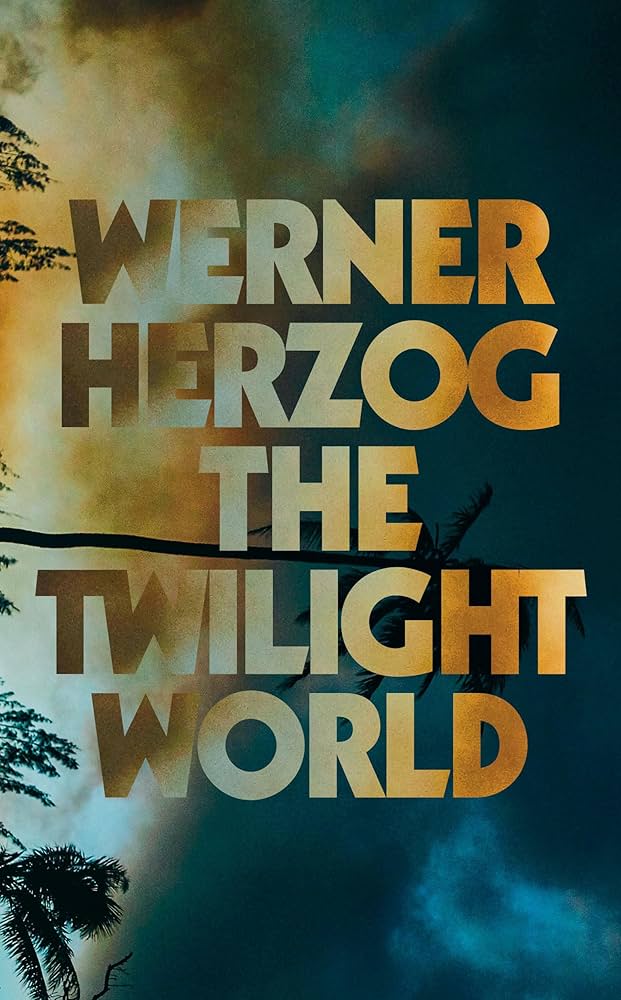
The Twilight World, a sliver of a book, is non-fiction written in the most poetic prose It tells the true story of Hiroo Onoda, a Japanese soldier. Right before WWII ends, he is stationed on the Philippine island of Lubang and told to hold the fort down for Japan. He ends up staying there for 29 years after the war ends, conducting guerilla warfare, traveling through the forest, surviving off the land and whatever he can steal from locals.
I have watched the movie on Onoda before (10,000 Nights in the Jungle) and read different articles on him. But The Twilight World world is different in two key ways. First, Werner Herzog writes such refreshing and accurate descriptions. His turns of phrases never failed to surprise me and take my breath away. Reading it, I can clearly feel and see the oppressive gloam of a rainforest at dusk; I can imagine breathing and moving through that thick blanket of humidity. I remember by reading The Twilight World what a tropical rainforest sounds like— the persistent drops of rain on large wet leaves, the birds, the ceaseless screech of insects. It brings me back instantly.
Secondly, Herzog states at the end of the book that as he personally spent some time in the jungle too, he was able to ask Onoda specific questions about survival techniques. This leads to fascinating deep dives into Onoda’s methodologies, such as how he learned how to make his own palm oil, or fires from wet wood.
- Into Thin Air, Jon Krakauer

In May 1996, Jon Krakauer joined one of the two most prolific groups that climbed Mount Everest that season as a participant and journalist. It turned out to be one of the most deadly expeditions the mountain has ever witnessed.
The two groups were led by celebrated guides Rob Hall and Scott Fischer, who rose to fame by ushering ultra-rich but non-mountaineering clients up Everest for a hefty price. They claimed that anyone could climb Mount Everest with the right guides. As the groups push for summit, a storm begins brewing. Storm or not, however, the two guides ignore the turnaround time and doggedly continue to bring their rich clients up against the climbing code. Krakauer seems to suggest that they do this because of a mixture of over-confidence, hubris, financial reasons and the celebrity of their clients. All these cause these well-established mountain climbers to throw caution to the wind.
In the middle of all this, a violent storm hits the mountain. The large crew gets separated, most of them blundering blindly about in the snow as their strength, communication channels and oxygen supplies get obliterated. One after the other, almost all the people (including Rob Hall and Scott Fischer) who did not start descending in time die, turning this great adventure into a mass graveyard.
Into Thin Air makes an incredibly gripping read. It reflects to us our need to achieve great things through the most outward symbol of this concept, mountain climbing. It is a testament to what drives us forward to excess and a reminder of the dire consequences when we take things too far.
 Hephzibah Grace
One thought on “Mid-Year Book Review: The Best Books I’ve Read So Far in 2024”